Dallas Downtown Loft vs Condo: Find Your Best Fit
June 4, 2026
June 4, 2026
Trying to choose between a loft and a high-rise in Dallas Central? It is a smart question, because the difference is about more than square footage or a pretty view. Your day-to-day experience, your privacy, your renovation plans, and even your building rules can feel very different depending on which path you choose. If you want a home that fits your lifestyle, this guide will help you compare the two with more clarity. Let’s dive in.
Dallas Central gives you a real side-by-side comparison between loft living and high-rise living. Downtown Dallas Inc. describes Downtown as the region’s only authentic walkable urban area, with more than 15,000 residents, over 475 restaurants and bars in the city center, and more than 100 acres of parks. It also notes that Downtown offers lofts, apartments, condos, and luxury high-rise living within a 10-minute commute.
That variety is a big reason this decision matters. In and around Downtown, the broader area is home to more than 145,000 residents, which creates enough demand for both historic conversions and newer tower residences. If you are looking for an urban home in Dallas, you are not choosing from one housing style. You are choosing how you want to live.
Dallas’s housing story also helps explain why lofts are so visible in the urban core. The Dallas Public Library notes that more than 30 historic buildings in Downtown and the immediate vicinity have been or are being converted into apartments, lofts, and condominiums. Downtown Dallas Inc. also reports that 4.5 million square feet of office space has been converted or demolished since 2010, showing how strongly adaptive reuse has shaped central-city housing.
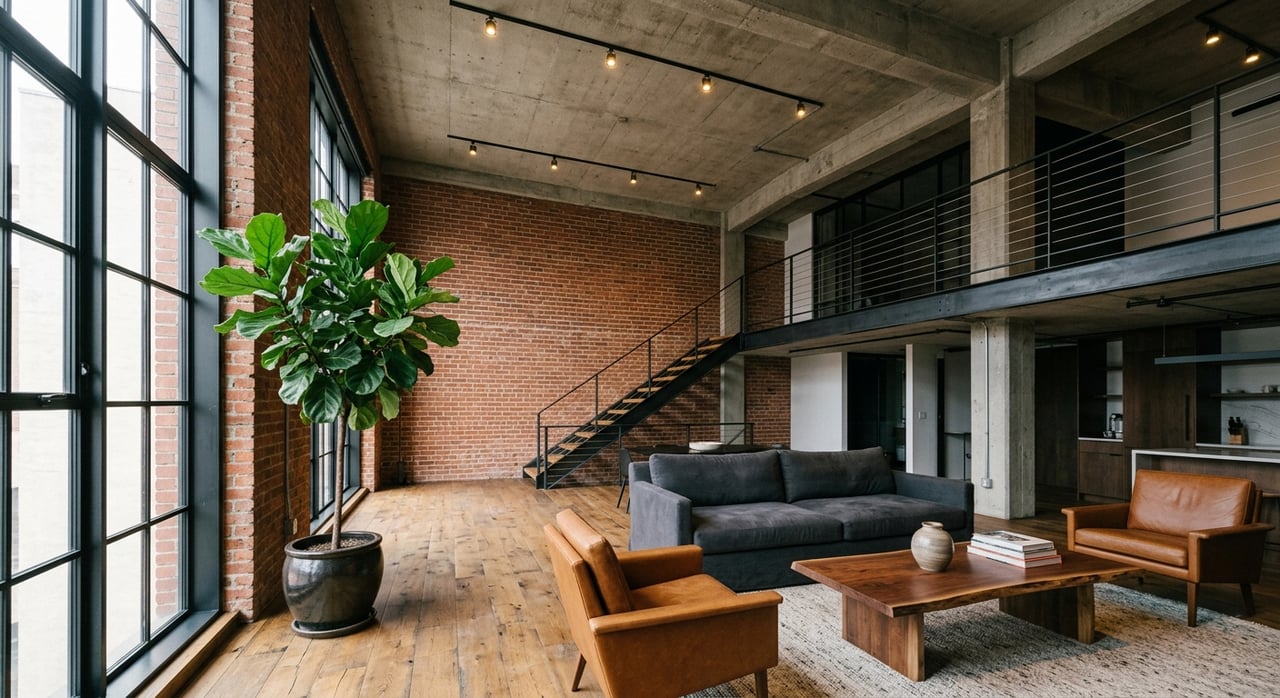
A loft usually starts with a different architectural origin. Traditionally, lofts are large undivided spaces that began as storage or industrial buildings and were later converted into residences. In Dallas, buildings like the Interurban, Davis, and Kirby show how former commercial structures became residential homes while keeping much of their original character.
That history affects how a loft feels when you walk in. Lofts often feel more expressive, more irregular, and less standardized than a typical condo. Instead of a highly structured floor plan, you may find open living areas, fewer partitions, and architectural details that reflect the building’s earlier life.
For many buyers, the biggest appeal is perceived volume. An open plan can make the home feel larger than the square footage alone suggests, and that flexibility can work well if you want space for entertaining, creative work, or a work-from-home setup. If you are drawn to homes with texture and personality, lofts often stand out.
High-rise living is shaped by vertical living and shared building systems. A high-rise is generally a multi-story building with elevators, and in Dallas Central that often means a more modern tower environment with a broader amenity package. These residences usually emphasize convenience, views, and a more polished building experience.
A local example helps paint the picture. AMLI Design District describes itself as a 23-story residential tower with floor-to-ceiling windows, private terraces, a penthouse roof deck, gourmet kitchens, a pool, a fitness center, and LEED Gold certification. While each building is different, that kind of feature set reflects what many buyers expect when they choose a high-rise format.
In practical terms, high-rise homes often feel more predictable in layout and building operations. You may give up some historic character, but you often gain a stronger amenity stack and a more service-oriented environment. For buyers who want a lock-and-leave lifestyle, that trade can be very appealing.
| Feature | Loft Living | High-Rise Living |
|---|---|---|
| Typical feel | Historic, open, architectural | Vertical, polished, amenity-rich |
| Layout | Often open with fewer partitions | Usually more standardized |
| Character | Strong adaptive-reuse identity | More defined by tower design and views |
| Amenities | Varies by building | Often more extensive |
| Privacy feel | Can feel less private due to openness | More separation from street level, but still shared walls and common areas |
| Best fit | Buyers who value design character and flexibility | Buyers who value convenience, views, and managed living |
The way a home is built shapes the way you live in it. In a loft, the open plan can feel inspiring and visually striking, but it can also mean less separation between living, sleeping, and working zones. If you like the idea of shaping your own environment, that flexibility may feel like a major benefit.
In a high-rise, the experience is usually more structured. You are more likely to have clearly defined rooms, elevators, secured common spaces, and a building that runs more like a managed community. That can make everyday living feel smoother, especially if convenience is high on your list.
It is also worth noting that these categories can overlap. The Kirby Building is a high-rise structure that was converted into 156 loft apartments, which shows that loft is not only about building height. In Dallas Central, the real comparison is often historic openness versus tower convenience.
Sound and privacy are often deciding factors, especially if you work from home or value a calm interior. Because lofts tend to have open layouts and harder surfaces, they may feel less private and may carry noise more easily. That is tied to the loft form itself, though every building performs differently.
High-rise units often offer more separation from the street and can deliver stronger views. Still, they are not automatically quiet. You are still sharing walls, corridors, elevators, and mechanical systems with other residents.
The smartest approach is to look beyond the label. Pay attention to the building’s construction, your unit’s orientation, nearby common areas, and the location of neighboring units. A well-positioned loft may feel more comfortable than a poorly placed tower unit, and vice versa.
Your neighborhood choice can push you toward one lifestyle or the other. Downtown Dallas offers a dense mix of restaurants, bars, shops, parks, and cultural venues, which supports both loft buildings and high-rise residences. If you want to be in the middle of the urban core, you will find both options here.
Uptown adds another layer of appeal for buyers who prioritize walkability. Visit Dallas describes Uptown as extremely walkable and notes that the free M-Line trolley makes 39 stops throughout Uptown and Downtown. That can make car-light living feel more realistic for buyers who want daily convenience.
The Design District presents a different urban mood. The area has evolved from a warehouse district into a live-work-play neighborhood and now includes its first residential high-rise. If you are comparing art-forward industrial character with newer luxury tower living, this district can make the contrast especially clear.
One of the most important differences between buildings is not visual at all. It is the association structure and the rules that come with it. If your unit is a condominium, Texas Property Code Chapter 82 applies.
Under Chapter 82, associations must keep detailed financial records, plans and specifications, unit owner names and mailing addresses, voting records, and meeting minutes, and those records must be made reasonably available. The law also gives buyers disclosure protections tied to the resale certificate, and associations may charge a reasonable and necessary fee of up to $375 to provide that certificate.
If the property falls under a property owners’ association instead of a pure condo regime, Chapter 209 applies. That chapter generally requires regular and special board meetings to be open to owners, allows executive sessions only for limited topics, and requires owner access to association books and records. It also requires management certificate filing and updates with TREC after county recording.
For you as a buyer, the takeaway is simple. Do not assume a building is easy to own just because it looks beautiful. Review the declaration, bylaws, budget, meeting minutes, and rules before you commit.
If you are buying with renovation ideas in mind, especially in an older loft conversion, due diligence becomes even more important. The City of Dallas says a residential permit is required for construction, renovation, and major repairs. It also says that, except for single-family and duplex uses, a certificate of occupancy is required before using or changing the use of a building or part of a building.
That matters because not every design idea is easy to execute after closing. If you want to rework an interior plan, add built-ins, or make major changes, you need to understand both city requirements and association restrictions. In a character-rich loft, the design potential can be exciting, but the approval path may require more planning.
If you are pulled toward loft living, you may care most about historic character, adaptive-reuse authenticity, and flexible open space. This option often appeals to buyers who want a home with visual identity and enough freedom to shape how they live and work. If the home itself is part of the story you want to tell, a loft may feel more personal.
If you are pulled toward high-rise living, you may value views, amenities, and a more managed day-to-day experience. This choice often fits buyers who travel often, want a lock-and-leave setup, or prefer newer systems and a building environment that feels more fully serviced. If ease and convenience matter most, a tower may align better with your routine.
The long-term view matters too. Think about future household size, work-from-home needs, storage, parking, and how much openness or density will still feel right in five to ten years. The best home is not just the one that looks right today. It is the one that still supports your life as it evolves.
In Dallas Central, the loft-versus-high-rise decision is rarely just about price. It is usually about whether you want historic texture and open volume or tower convenience and amenity density. Because Dallas offers enough of both, this is one of the most meaningful lifestyle choices you can make as an urban buyer.
A design-forward search works best when you balance aesthetics with practical review. The right home should feel beautiful, but it should also fit how you move through your day, what level of privacy you want, and how comfortable you are with the building’s rules and long-term structure. When you look at the choice through that lens, the right answer usually becomes much clearer.
If you are comparing lofts and high-rises in Dallas Central and want a lifestyle-first, design-minded perspective, connect with Noe De Leon for a more tailored search.
Stay up to date on the latest real estate trends.
Negotiates some of the most recognizable modern/contemporary homes in the Dallas/Ft.Worth area. His new conversation in real estate is building a Luxury Real Estate Community where we foster knowledge and network, called the COLLECTIVE Luxury DFW. Contact Noé today.
Noé De Leon
[email protected]
(214) 207-9093
License #0614650
2482 Sedalia CT Frisco TX 75034