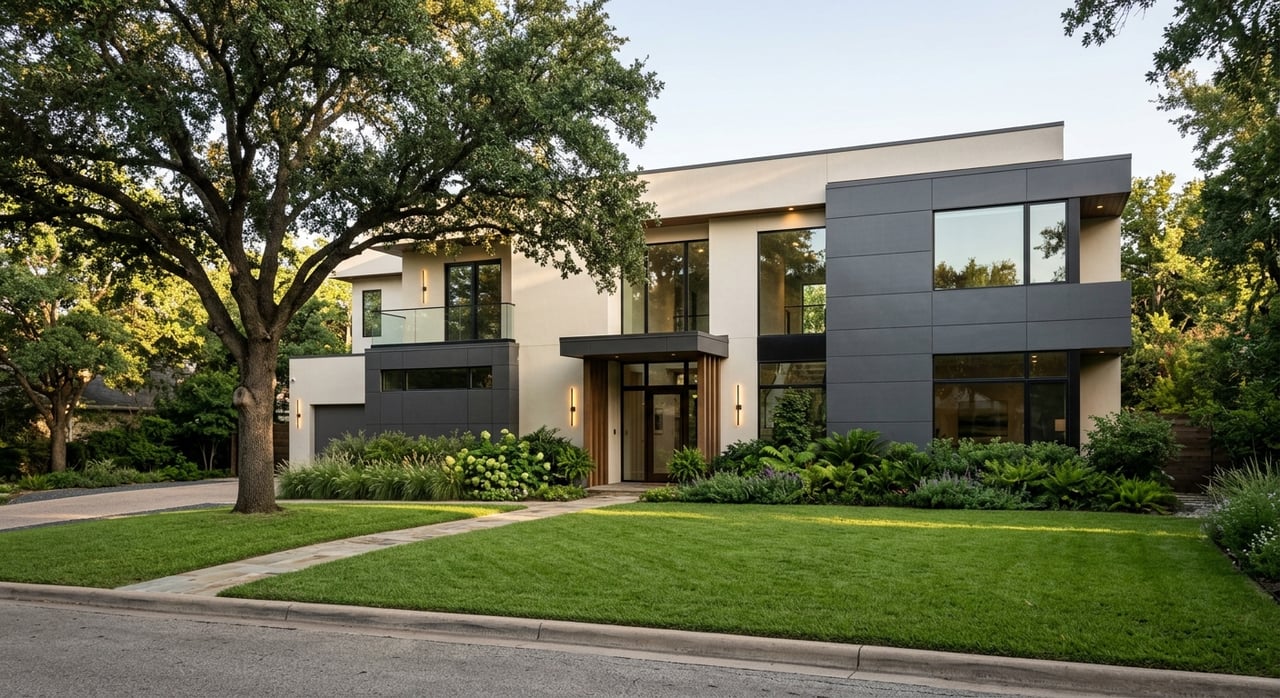
McKinney New Construction vs Resale: How to Decide
April 16, 2026
April 16, 2026
If you are deciding between new construction and an established neighborhood in McKinney, you are not just choosing a house style. You are choosing how you want to live day to day, what kind of setting feels right, and how much flexibility you want in the buying process. In a city that continues to grow while also preserving its historic character, both options can make sense depending on your goals. Let’s look at how to compare them clearly.
McKinney offers a rare mix of ongoing growth and long-established neighborhoods. According to the City of McKinney, the city has averaged more than 1,800 residential housing permits per year since 2016 and adds about 5,000 new residents annually. The same source notes that 2025 activity included 1,639 single-family permits and 8 multifamily permits, totaling 3,031 new housing units.
That pace of growth means you can still find active new-home communities with modern layouts and amenities. At the same time, McKinney’s older districts remain an important part of the city’s identity, with preserved homes, mature streetscapes, and close ties to downtown. The city’s 2040 Comprehensive Plan makes it clear that built-out established areas and newer-growth districts are being guided in different ways.
For buyers, that creates a meaningful choice. You are not deciding between better and worse. You are deciding between two distinct ownership experiences.
New construction in McKinney is not one-size-fits-all. The city’s district planning shows a range of community styles, from larger-lot residential areas to master-planned neighborhoods with trails, parks, and varied housing options.
For example, the city describes Trinity Falls as a 2,000-acre master-planned community with an on-site elementary school, a 350-acre natural park, miles of trails, and access to Highway 75 and US 380. Painted Tree offers another version of newer living, with three districts, 200 acres of open space, a 20-acre lake, and options that include single-family homes, townhomes, and lease homes.
If you are drawn to fresh finishes, current floor plans, and organized amenities, newer communities may feel like a strong fit from the start. They often appeal to buyers who want cleaner design lines, more open living spaces, and less immediate maintenance.
One of the biggest advantages of new construction is flexibility. If your priority is choosing a floor plan, selecting finishes, or finding a home with updated systems and energy-efficient features, newer communities tend to offer more control.
That can matter if you want a home that reflects your taste without planning major renovations right away. In communities such as Painted Tree and Trinity Falls, active development also means more opportunities to compare home styles and phases as inventory evolves.
Many buyers choose new construction because they want a neighborhood designed around a complete lifestyle. Trails, open space, parks, and shared amenities are often built into the plan rather than added later.
That is especially relevant in McKinney, where the city’s growth districts are shaped through long-range planning. The result is that newer communities can feel intentionally structured, with predictable patterns for future development, road access, and amenity placement.
The trade-off is usually time. If you buy in a community that is still developing, you may need to wait for a lot release, construction timeline, or final completion.
For some buyers, that is worth it. For others, especially if your move is tied to a job change or home sale deadline, a resale home in an established neighborhood may be easier to align with your schedule.
Established neighborhoods in McKinney offer something very different. Their appeal is often about character that has already taken shape, both in the homes and in the setting around them.
The city’s Residential Historic Walking Tour highlights preserved historic homes, varied architectural styles, and tree-lined streets. The same city resource also points to the legacy and cultural significance of East McKinney neighborhoods, including historically Black and Hispanic neighborhoods recognized for their architecture and community history.
If you value a home that feels distinctive rather than uniform, this part of McKinney may stand out. In many established areas, the streetscape is part of the lifestyle, not just the backdrop.
Older neighborhoods tend to offer more variation from one home to the next. You may see different facades, porch styles, rooflines, lot layouts, and landscaping patterns within the same area.
That variety appeals to buyers who want a more collected, less predictable look. Mature trees, settled streets, and preserved architecture can create an atmosphere that feels layered and rooted over time.
If you want easier access to the heart of McKinney, established neighborhoods often have an advantage. The city describes the Cultural District as its primary attraction and home to more than 120 independently owned businesses.
For many buyers, that means established neighborhoods are attractive not only because of the homes themselves, but because of the surrounding experience. Restaurants, events, local shops, and a more historic downtown setting can become part of your routine.
Established homes can also offer renovation upside. If you are comfortable updating a property over time, resale homes may provide more room to personalize through improvements.
That said, renovation should never be treated casually in McKinney’s older districts. The city’s planning maps and preservation tools show that some areas, including the Historic Overlay District, may require a Certificate of Appropriateness for exterior work. The city also offers programs such as historic tax exemptions and a Housing Rehabilitation Program for eligible improvements, which can be useful depending on the property and location.
A common assumption is that newer homes always sit on smaller lots and older homes always come with more land. In McKinney, that is not always true.
The city’s district descriptions show that Northridge includes some estate-residential development with larger lots. That means buyers should evaluate lot size by individual property and community, not by age alone.
In established neighborhoods, the value may be less about raw parcel size and more about mature landscaping, tree canopy, and how the lot relates to the streetscape. In new construction, the lot may vary widely depending on builder product, phase, and district plan.
If you feel torn, start with your lifestyle priorities rather than the year the home was built. That tends to bring the right answer into focus faster.
One of the smartest ways to compare your options is to tour one community from each category. Seeing only new construction or only resale homes can make the decision harder because you miss the contrast.
A practical pairing is to visit Painted Tree or Trinity Falls on one day, then explore the Historic Downtown and legacy-neighborhood area on another. That side-by-side experience usually makes the trade-offs much easier to feel in real time.
You may discover that you care more about trails, new finishes, and a community plan than you expected. Or you may realize that tree-lined streets, preserved homes, and downtown proximity matter more than having a brand-new house. Either outcome is helpful because it points you toward the right fit.
In McKinney, the question is not simply whether new is better than old. It is whether you want customization and current amenities, or architectural character and potential renovation value, within a city that offers both. With the median owner-occupied home value in McKinney at $471,800 according to Census QuickFacts cited by the city, making the right lifestyle choice matters just as much as making the right financial one.
If you want a design-minded, strategic approach to comparing McKinney communities, Noe De Leon can help you evaluate the setting, home style, and long-term fit with clarity.
Stay up to date on the latest real estate trends.
Negotiates some of the most recognizable modern/contemporary homes in the Dallas/Ft.Worth area. His new conversation in real estate is building a Luxury Real Estate Community where we foster knowledge and network, called the COLLECTIVE Luxury DFW. Contact Noé today.
Noé De Leon
[email protected]
(214) 207-9093
License #0614650
2482 Sedalia CT Frisco TX 75034